The quietest ascent – Kilimanjaro’s northern approach
The Rongai Route is Kilimanjaro’s only trail that approaches from the north, near the Kenyan border, and descends via the Marangu Route. It’s a quieter, drier route with gentle gradients – ideal for less-experienced trekkers seeking a more remote experience and a gradual ascent. It is not as scenic as the other routes because of its geographical location.
We offer this route as a six or seven day climb. The six days variation does not have an overnight stay at the Second Cave on day two.
Be careful when choosing between 6 and 7 day Rongai route itineraries. While the 6-day option can be suitable for experienced trekkers with previous high-altitude experience, we strongly recommend the 7-day itinerary for most climbers.
The key difference is the acclimatisation time around Mawenzi Tarn. The 7-day itinerary allows you to spend an extra night at approximately 4,300m, with an acclimatisation hike before continuing across the Saddle towards Kibo. This gives your body more time to adapt to the altitude and helps you approach the summit attempt better prepared.
Rongai is known for its quiet northern approach, gradual ascent drier conditions and spectacular views of Mawenzi Peak and the Kenyan plains. However, its relatively steady altitude profile makes proper acclimatisation especially important.
Our expert recommendation: choose 7 days whenever possible. The additional day is not simply an extra night on the mountain – it is an important part of a well-designed acclimatisation strategy and a more comfortable summit
Your adventure begins around 8am when our guide will pick you up from your hotel and drive around 173km/104 miles - taking about 4 hours - to the Rongai Gate, near the Kenyan border. After registration and lunch, we begin trekking through cultivated farmland and pine forest — a peaceful start to the climb.
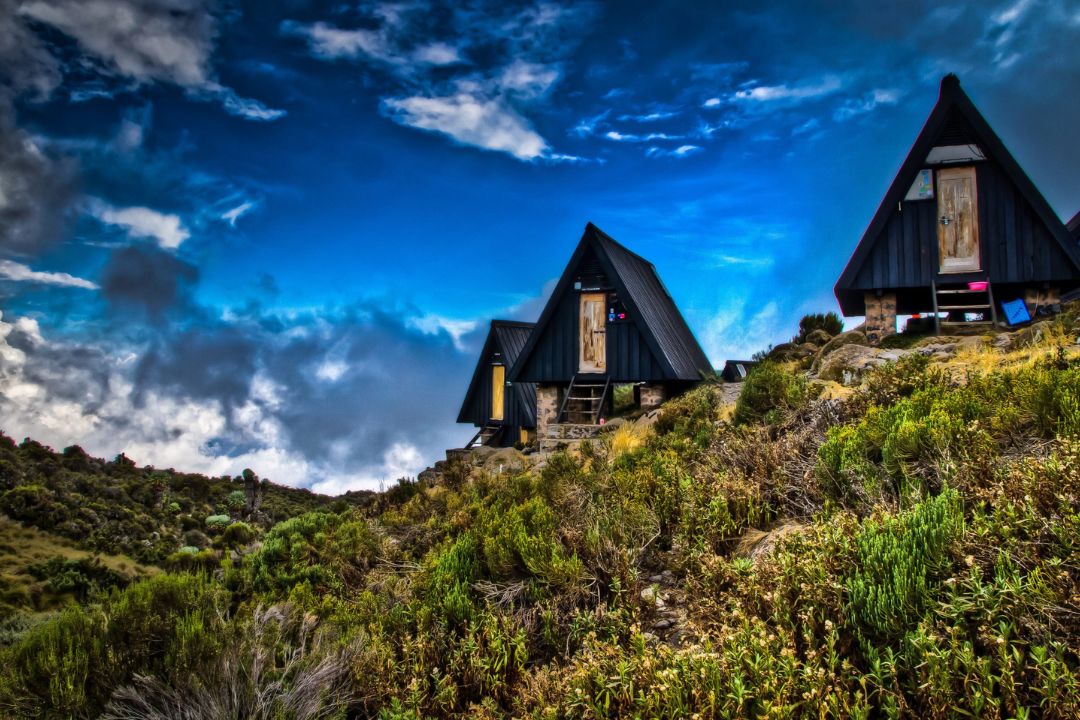
The trail is gentle, with occasional sightings of colobus monkeys and forest birds. Simba Cave Camp sits on the edge of the forest zone. We will get there in the evening and you will find your tent erected and dinner being prepared in the kitchen tent. Dinner will follow shortly before we go to bed for a long rest looking forward to day two trekking.
Elevation: 1,997m to 2,635m |
Distance: 7km |
Time: 3-4 hours
Accommodation: Tent
Meals: Lunch & Dinner
We begin this morning with a steady incline up to the First Cave and on to the Second Cave. Here lunch will be served. We will then continue trekking through moorland with low vegetation and expansive views, traversing to the East approaching the majestic peak of Mawenzi, before finally arriving at Kikelelwa Cave for the night. Dinner will follow shortly, then a long rest waiting for the next day.
Elevation: 2,635m to 3,599m |
Distance: 12km |
Time: 6-8 hours
Accommodation: Tent
Meals: Breakfast, Lunch & Dinner
A short but steep climb takes us to Mawenzi Tarn - one of Kilimanjaro’s most dramatic campsites. Leaving the bushy heath, we emerge into the lower part of Kilimanjaro's Alpine desert where the landscape changes dramatically.
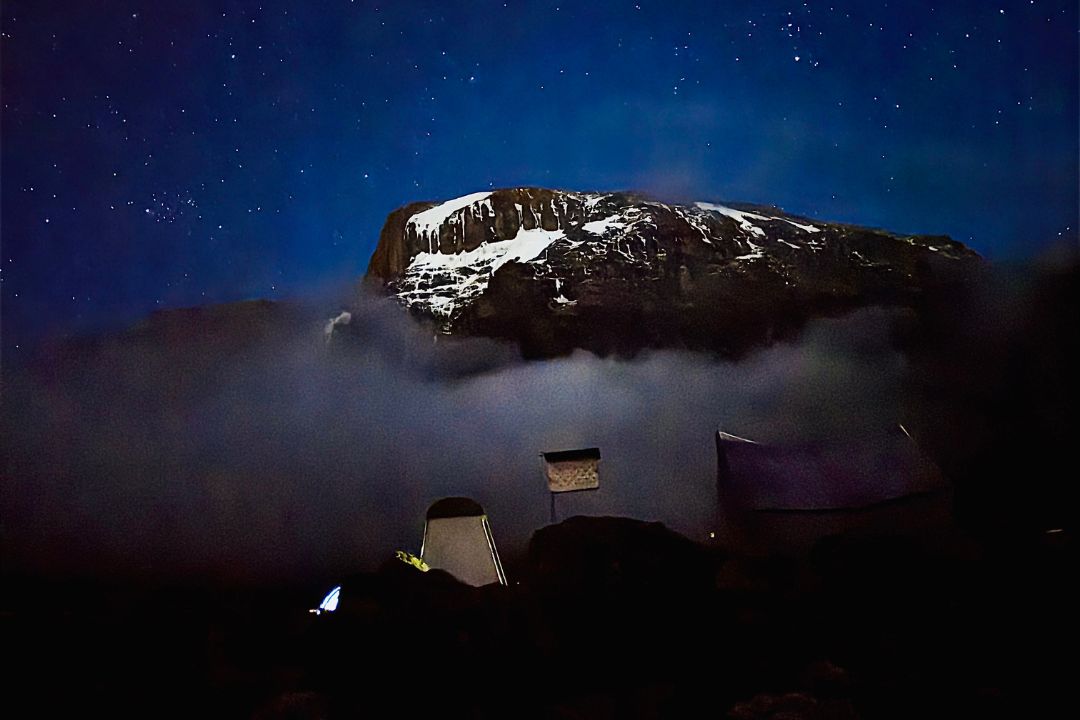
Our camp today is situated at the foot of Mawenzi, at Mawenzi Tarn. This stage of the trek is relatively short and is commonly finished before noon, allowing enough time to rest and embark on an acclimatisation hike later in the day. Lunch will be served shortly after our arrival. The remainder of the day can be spent relaxing or exploring the area.
Elevation: 3,599m to 4,330m |
Distance: 5km |
Time: 3-4 hours
Accommodation: Tent
Meals: Breakfast, Lunch & Dinner
Today’s trek involves a gradual climb across the “Saddle” - a wide, barren expanse between Mawenzi and Kibo. The trail is long but gentle, with views of both volcanic peaks. You will notice the air becoming thinner as you walk.
Our camp, Kibo Hut, sits at the base of the summit trail and serves as our base camp. Dinner is early, and rest is essential before the midnight ascent.
At the end of this day, we have two destinations to choose from - Kibo Hut or School Hut. The two base camps are located on the lower Eastern slopes of the Kibo summit and are only about 30 minutes apart.
Elevation: 4,330m to 4,714m |
Distance: 8km |
Time: 5-6 hours
Accommodation: Tent
Meals: Breakfast, Lunch & Dinner
We begin the final push around midnight. We ascend in the darkness for several hours, taking frequent, short, breaks. After about 5-6 hours, we reach Gilman’s Point, right at the edge of the crater rim. If you started the trek at midnight, you’ll be able to watch the beautiful sunrise over the Mawenzi Peak.
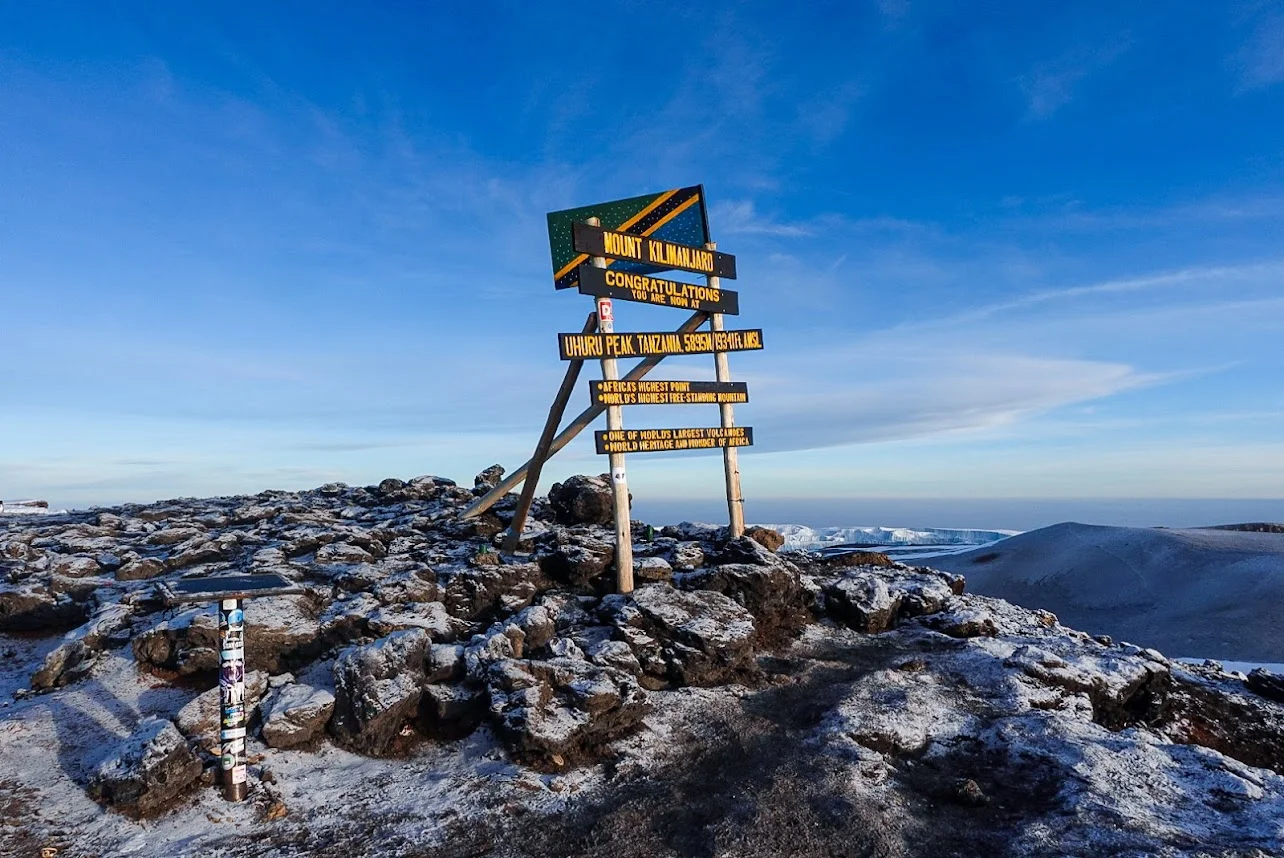
We continue to Stella Point (5,745m) on the rim of the Kibo crater and from there, we continue to Uhuru Peak (5,895m) — the highest point in Africa!
Elevation: 5,4714m to 5,985m |
Distance: 6km |
Time: 7-8 hours
After celebrating at the summit and a brief rest, we descend to Horombo Hut, via Kibo Hut and across the Saddle.
We break for lunch at Kibo Hut and rest for 1-2 hours before continuing to Horombo Hut.
Later in the evening, we enjoy our last dinner on the mountain and a well-earned sleep after a long, tiresome hike
Elevation: 5,895m to 3,719m |
Distance: 15km |
Time: 6-7 hours
Accommodation: Tent
Meals: Breakfast, Lunch & Dinner
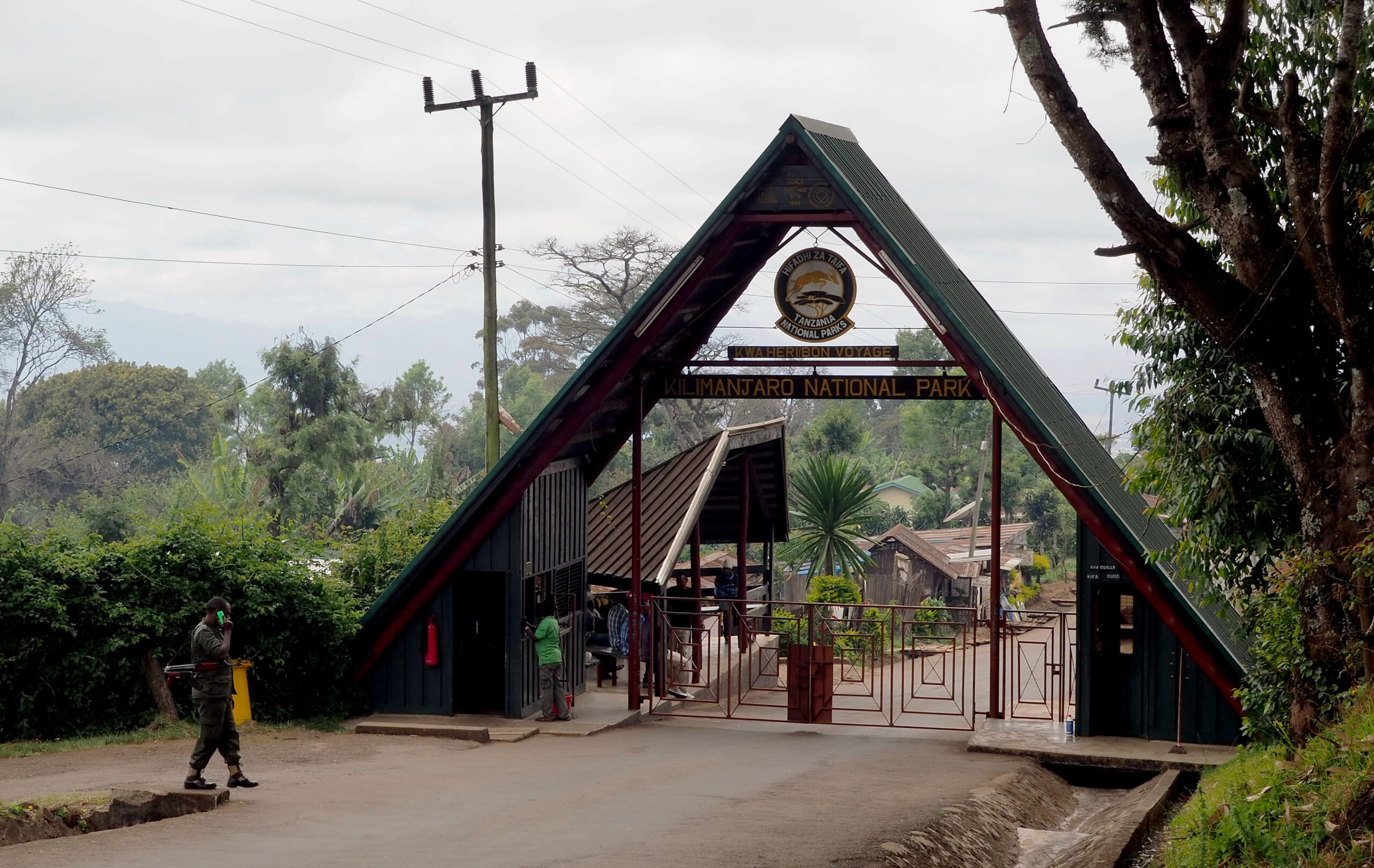
Our last day is a long trek, mostly downhill. A gentle descent through moorland and then forest brings us to Marangu Gate, where certificates are collected.
A bus will be waiting to take you to your celebratory lunch and then back to your hotel, where you can treat yourselves to warm showers and cold beers. Your trek comes to an end. Your guide will advise you on final arrangements and you will have a chance to thank the entire team before parting ways.
Elevation: 3,719m to 1,905m |
Distance: 20km |
Time: 5-6 hours
Meals: Breakfast & Lunch
Your adventure begins around 8am when our guide will pick you up from your hotel and drive around 173km/104 miles - taking about 4 hours - to the Rongai Gate, near the Kenyan border. After registration and lunch, we begin trekking through cultivated farmland and pine forest — a peaceful start to the climb.
The trail is gentle, with occasional sightings of colobus monkeys and forest birds. Simba Cave Camp sits on the edge of the forest zone. We will get there in the evening and you will find your tent erected and dinner being prepared in the kitchen tent. Dinner will follow shortly before we go to bed for a long rest looking forward to day two trekking.
Elevation: 1,997m to 2,635m |
Distance: 7km |
Time: 3-4 hours
Accommodation: Tent
Meals: Lunch & Dinner
We begin this morning with a steady incline up to the First Cave and on to the Second Cave. Here lunch and dinner will be served and we will have an overnight stay at the Second Cave.
Elevation: 2,635m to 3,487m |
Distance: 5km |
Time: 3-4 hours
Accommodation: Tent
Meals: Breakfast, Lunch & Dinner
We continue through moorland with low vegetation and expansive views. The trail is steady and allows for gradual acclimatisation. Kibo’s snowy summit begins to appear ahead.
After 3-4 hours of trekking, we will finally arrive at the Kikelelwa Campsite. Dinner will follow shortly, then a long rest waiting for the next day.
Elevation: 3,487m to 3,599m |
Distance: 9km |
Time: 3–4 hours
Accommodation: Tent
Meals: Breakfast, Lunch & Dinner
A short but steep climb takes us to Mawenzi Tarn — one of Kilimanjaro’s most dramatic campsites. Leaving the bushy heath, we emerge into the lower part of Kilimanjaro's Alpine desert where the landscape changes dramatically.
Our camp today is situated at the foot of Mawenzi, at Mawenzi Tarn. This stage of the trek is relatively short and is commonly finished before noon, allowing enough time to rest and embark on an acclimatisation hike later in the day. Lunch will be served shortly after our arrival. The remainder of the day can be spent relaxing or exploring the area.
Elevation: 3,599m to 4,330m |
Distance: 5km |
Time: 3-4 hours
Accommodation: Tent
Meals: Breakfast, Lunch & Dinner
Today’s trek involves a gradual climb across the “Saddle” - a wide, barren expanse between Mawenzi and Kibo. The trail is long but gentle, with views of both volcanic peaks. You will notice the air becoming thinner as you walk.
Our camp, Kibo Hut, sits at the base of the summit trail and serves as our base camp. Dinner is early, and rest is essential before the midnight ascent.
At the end of this day, we have two destinations to choose from - Kibo Hut or School Hut. The two base camps are located on the lower Eastern slopes of the Kibo summit and are only about 30 minutes apart.
Elevation: 4,330m to 4,714m |
Distance: 8km |
Time: 5-6 hours
Accommodation: Tent
Meals: Breakfast, Lunch & Dinner
We begin the final push around midnight. We ascend in the darkness for several hours, taking frequent, short, breaks. After about 5-6 hours, we reach Gilman’s Point, right at the edge of the crater rim. If you started the trek at midnight, you’ll be able to watch the beautiful sunrise over the Mawenzi Peak.
We continue to Stella Point (5,745m) on the rim of the Kibo crater and from there, we continue to Uhuru Peak (5,895m) — the highest point in Africa!
Elevation: 5,4714m to 5,985m |
Distance: 6km |
Time: 7-8 hours
After celebrating at the summit and a brief rest, we descend to Horombo Hut, via Kibo Hut and across the Saddle.
We break for lunch at Kibo Hut and rest for 1-2 hours before continuing to Horombo Hut.
Later in the evening, we enjoy our last dinner on the mountain and a well-earned sleep after a long, tiresome hike
Elevation: 5,895m to 3,719m |
Distance: 15km |
Time: 6-7 hours
Accommodation: Tent
Meals: Breakfast, Lunch & Dinner
Our last day is a long trek, mostly downhill. A gentle descent through moorland and then forest brings us to Marangu Gate, where certificates are collected.
A bus will be waiting to take you to your celebratory lunch and then back to your hotel, where you can treat yourselves to warm showers and cold beers. Your trek comes to an end. Your guide will advise you on final arrangements and you will have a chance to thank the entire team before parting ways.
Elevation: 3,719m to 1,905m |
Distance: 20km |
Time: 5-6 hours
Meals: Breakfast & Lunch
* Indicative costs per person, excluding international airline tickets.
Your safety is our priority. Wilderness First Responder–certified lead guides, daily health monitoring, and calm, professional decision‑making at altitude.




 English
 German
 French
 Spanish